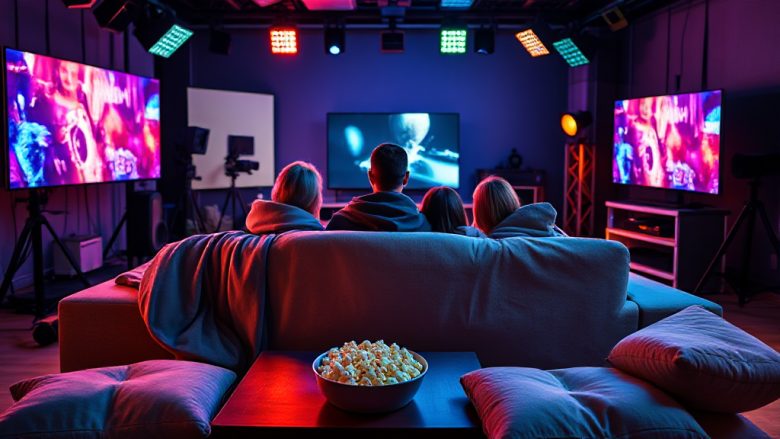
Our first family movie night lasted eleven minutes. The film never started. One child wanted a cartoon, another wanted something with dinosaurs, my partner wanted a thriller, and the youngest was already lying on the floor complaining that the couch was too small. I had popcorn burning in the kitchen. That night taught me more than any article could have, and the version we run now — roughly a year and forty movie nights later — looks nothing like that first attempt.
These family movie nights tips for beginners are the things I wish someone had told me before I pressed play on a film nobody had agreed to. Nothing here is complicated. It’s mostly about deciding things before the evening starts, so the evening itself can actually be fun.
Before the Night: The Prep Checklist That Saves the Evening
The single biggest mistake beginners make is treating movie night like a spontaneous event. It isn’t. It’s a small production, and productions need decisions made in advance. If you leave the film choice, the snack choice and the seating arrangement to the moment everyone sits down, you’ve built a negotiation into what was supposed to be relaxation.
Start by picking the day and sticking to it. Ours is Friday, and the predictability matters more than I expected. The kids stop asking for screen time on other nights because they know Friday is coming. A fixed slot also gives you a deadline: if the room isn’t tidy by seven, the movie starts late, and somehow the room is always tidy by seven.
Then handle the boring logistics early in the day, not at showtime. Charge the remote batteries or check that the streaming device is actually connected. Test the volume before everyone is settled, because the volume argument is real and it always happens during the opening credits. Decide whether phones go in a basket. In our house they do, adults included, and that one rule did more for the atmosphere than any film we’ve watched.
Finally, set an end time. A movie night that runs past everyone’s tolerance turns into a grumpy morning. Ours ends at a fixed hour whether the film is finished or not, and we simply finish it the following week if we care enough. Usually we don’t, and that’s fine.
Choosing the Film Without a Fight
This is where beginners lose the most time. The trick isn’t finding a film everyone loves. That film barely exists. The trick is finding one everyone can tolerate, which is a much lower bar and a much easier target.
We use a rotating picker system. Each family member gets one turn in order, and the picker chooses alone. No vetoes, no debate, no committee. The only rule is that the pick has to be reasonable for the youngest person in the room, which in practice means nothing graphically violent and nothing that runs past bedtime. When it’s not your turn, you watch what’s chosen or you skip the night. That sounds harsh, but it killed ninety percent of our arguments instantly, because nobody has to negotiate when they know their turn is coming.
For the picker, a little preparation helps. Keep a running list somewhere visible — a note on the fridge, a shared list on a phone — of titles people mention wanting to see. When it’s your turn and you can’t think of anything, the list decides for you. We also keep a rule about new versus familiar: alternate between something nobody has seen and something the kids already know by heart. New films get attention. Familiar films get comfort. Both have a place, and mixing them keeps the ritual from getting stale.
One more practical tip: check the runtime before you commit. A two-hour film with a slow first act is a trap. For beginners, aim for ninety minutes or less until your family builds up its attention span. You can always graduate to longer films later.
Snacks, Seating and the Setup That Actually Works
Food is half the appeal for most kids, so don’t overthink it, but do keep it simple enough that you’re not stuck in the kitchen while the film plays. The best movie night snack is one you can prepare in advance and hand out in a single trip.
Popcorn is the obvious choice and it works, but plain popcorn gets boring by week four. We rotate through a few easy options: a plate of cut fruit, a bowl of pretzels, small portions of whatever dessert is in the house. Portion control matters more than variety. A child with a giant bowl of sweets will be restless by the second act, and you’ll spend the rest of the film managing sugar rather than watching anything.
Drinks should be in cups with lids if your family includes anyone under six. This is not a stylistic preference. It’s the difference between a normal evening and mopping the couch at eleven at night.
Seating is the other thing beginners underestimate. Everyone wants the same spot, and that spot is usually the middle of the couch. We solved it by assigning seats for the first month, then letting it settle naturally once the novelty wore off. Blankets help enormously — a shared blanket seems to reduce the amount of wriggling, possibly because nobody wants to be the one who lets the cold air in. If you have a projector or a large television, check the viewing angle from the worst seat in the room, not the best one. The person in the corner matters too.
Lighting is worth thirty seconds of thought. Total darkness makes it hard to see snacks and harder to see faces. A single low lamp behind the seating area gives you enough light to function without washing out the screen. That’s the whole setup. You don’t need a dedicated room or special equipment.
Interruptions, Early Quitters and Keeping the Peace
Someone will need the bathroom during the best scene. Someone will ask a question about the plot at the exact moment the plot is being explained. A younger child will announce, forty minutes in, that they’re bored and want to do something else. None of this means movie night is failing. It means you’re doing it with children.
The most useful habit we built was the pause. Learn where the pause button is and use it without guilt. We pause for bathroom breaks, for snack refills, and for the inevitable question that can’t wait. A film watched in three sittings over one evening is still a film watched together, and nobody remembers the pauses afterward.
For early quitters, give them an exit that doesn’t disrupt everyone else. A quiet corner with a book or a puzzle works well. The rule is that leaving is allowed but complaining loudly is not, because one bored child can pull the whole room out of the story. If the quitter is old enough, let them choose the next film as compensation. That usually buys their patience for the current one.
Plot questions are trickier. Answer briefly or not at all. A long explanation during the film breaks the spell for everyone, and the person asking usually just wants reassurance that they haven’t missed something important. A short “we’ll talk about it after” is almost always enough.
And when the film turns out to be a dud — and some will be — call it early. There’s no prize for finishing a bad movie. We’ve abandoned films twenty minutes in and swapped to something short, and those nights are remembered as fondly as the good ones. The point was never the film. It was the sitting together.
Making It a Habit Instead of a One-Off
The families who keep movie night going for years aren’t the ones with the best screen or the biggest snack budget. They’re the ones who made it small enough to repeat. A weekly slot, a simple rotation, a bowl of something easy, and a willingness to stop when it stops being fun. That’s the entire formula, and it survives busy weeks, bad moods and the occasional terrible film choice.
If you’re starting this week, don’t aim for perfect. Aim for done. Put a day on the calendar, let one person pick, make popcorn, and press play. The first one might be messy. Ours was. The tenth one won’t be, and by then it won’t matter whether it is.
Common Questions About Family Movie Nights
What if my kids can’t agree on a film at all?
Stop trying to reach consensus. Use a rotating picker so each person chooses on their own turn, with a single rule about age-appropriateness. The certainty of a future turn removes most of the resistance, and the arguments fade within a few weeks.
How long should a family movie night last?
For beginners, plan around ninety minutes including snacks and settling in. Choose films under an hour and a half until everyone’s attention span grows. If the film runs long, split it across two nights rather than forcing everyone to stay up.
What do I do when a younger child gets bored halfway through?
Give them a quiet alternative in the same room — a book, a puzzle, a drawing pad — so they can opt out without pulling everyone else out of the film. Allow leaving, but keep the room calm. If boredom is a pattern, try shorter films or start earlier in the evening.
Do we need special equipment for a good movie night?
No. A normal television, a working remote, one low lamp and enough seating for everyone is plenty. Blankets and a lid on every drink cup do more for the experience than any upgrade you could buy.