When the Plunger Fails: Drain and Sewer Escalation in Anhangabaú
The most common mistake people make when a drain in Anhangabaú stops draining is to keep plunging harder and longer, assuming more force will eventually clear it. In practice, repeated plunging on a blocked line often pushes waste deeper, loosens old joints, and turns a simple clog into a flooded floor. When the usual method does not work, the right move is to stop, identify what kind of blockage you are dealing with, and escalate to a professional service such as a desentupidora Anhangabaú São Paulo SP before the problem spreads to neighboring units or the street network.
Why the Plunger Stops Working in Anhangabaú Buildings
Anhangabaú sits in a dense, old part of central São Paulo, where many buildings combine decades-old cast iron or PVC branches with newer renovations. That mix creates predictable failure points. A plunger works by creating pressure and suction inside a short trap or branch line. Once the blockage sits farther down the stack, in a vertical drop, or in the building’s main sewer line, the plunger has nothing to press against. The cup seals, the handle moves, and the water barely changes.
There is also the question of what is actually blocking the pipe. Grease and soap residue cool and harden on pipe walls, narrowing the passage until a small item catches and seals it. Roots enter through cracked joints and grow into a mat. In commercial kitchens and older residential buildings, sediment and scale build up over years. None of these respond to a rubber cup. In fact, repeated plunging can crack aged pipe joints and push wastewater into walls, which is far more expensive than the original clog.
Another common error is mixing chemicals. People pour caustic drain cleaner, wait, then plunge, then pour more. Caustic products generate heat and can damage PVC, and they rarely clear a full blockage; they just create a pool of corrosive liquid that a technician then has to work around. If a chemical has already gone in, tell the technician before work starts so the crew can use the right protective equipment.
Reading the Symptoms Before You Call Anyone
Before you pick up the phone, spend two minutes observing. The pattern of symptoms tells a technician a great deal about where the blockage is and what equipment will be needed. This is the same triage a support technician does on the first call, and it saves time on site.
Single fixture versus multiple fixtures
If only one sink or one toilet is slow, the blockage is usually in that fixture’s trap or branch. If a toilet gurgles when the bathroom sink drains, or water backs up in a shower when the washing machine empties, the blockage is in a shared branch or the main line. Multiple slow fixtures on different floors point to the vertical stack or the building connection to the public network.
Smells, sounds and backflow
A sewer smell that appears only when water runs suggests a dry trap or a venting problem rather than a full blockage. Bubbling sounds in a toilet after using a nearby sink indicate air is being pulled through the water seal because the line is partially blocked. Water rising in a floor drain during heavy use is a strong sign the main line is restricted. If wastewater backs up into multiple units at once, treat it as an emergency and keep everyone away from the affected area.
What to note for the technician
- Which fixtures are affected and on which floor.
- When the problem started and whether it followed heavy use, rain, or a renovation.
- Whether any chemical drain cleaner was used.
- Whether there is a history of repeat clogs in the same spot.
- Where the building’s cleanouts and inspection boxes are, if known.
What Professional Escalation Actually Involves
When a desentupidora Anhangabaú crew arrives, the first step is not brute force. It is locating the access points: cleanouts, inspection boxes, roof vents and, in some buildings, the basement drain. From there, the technician chooses a method based on the blockage type and pipe material.
Mechanical augers and rotating cables
A drain snake or rotating cable is used for branch lines and shorter runs. It cuts through soft blockages and can be fitted with different heads for grease, roots or scale. It is the right first tool for a single slow fixture and for lines where high-pressure water would be risky.
Hydrojetting for hardened buildup
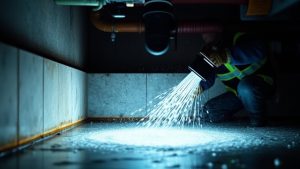
Hydrojetting uses high-pressure water directed through a specialized nozzle to scour the inside of the pipe. It removes grease, sediment and light root intrusion and restores the pipe’s full diameter rather than just poking a hole through the clog. It is the standard method for main lines and for commercial kitchens where grease returns quickly. The trade-off is that it requires proper access and should not be used on pipes already weakened by corrosion without inspection.
Camera inspection and root cutting
When a line keeps blocking in the same place, a camera inspection shows what the cable or jet cannot: broken pipe, offset joints, collapsed sections or roots entering through a crack. A root-cutting head can clear the intrusion, but if the pipe is damaged, clearing it is temporary. The honest outcome of an inspection is sometimes a recommendation for repair or lining rather than another cleaning.
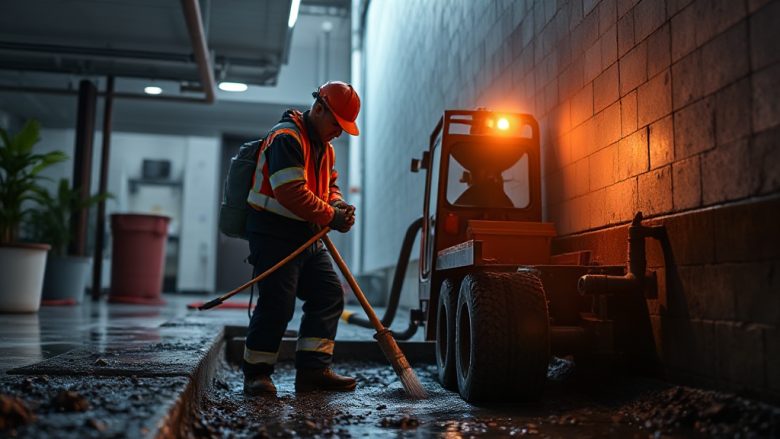
A professional crew also protects the site. That means containment for wastewater, disinfection of affected floors, and proper disposal of the removed material. In a building with residents, the difference between a clean job and a mess is often the containment setup, not the equipment itself.
Costs, Trade-offs and When to Stop DIY
The cost of escalation depends on access, blockage type and time of day. A single fixture cleared through an accessible trap is a short job. A main line that requires hydrojetting, camera inspection and work in a basement or garage takes longer and uses more equipment. Emergency calls at night or on weekends carry a premium, which is why the cheapest option is usually to call during business hours before the problem becomes a flood.
The real trade-off is not the price of the service versus the price of a plunger. It is the price of the service versus the cost of a burst joint, a damaged floor, or wastewater in a neighbor’s unit. In older Anhangabaú buildings, a failed DIY attempt can mean replacing a section of pipe inside a wall. That is the point where the usual method has clearly stopped working.
| Signal | Likely cause | Best next step |
|---|---|---|
| One slow sink or toilet | Local trap or branch clog | Try a cup plunger once, then call if unchanged |
| Gurgling across fixtures | Partially blocked branch or vent issue | Professional inspection |
| Backflow in floor drain | Main line restriction | Stop using water, call emergency service |
| Repeat clog in same spot | Roots, scale or damaged pipe | Camera inspection before more cleaning |
Stop DIY when water backs up into more than one fixture, when the water is dark or smells strongly of sewage, when a chemical cleaner has already been used, or when the same drain has blocked twice within a few months. Those are not plunger problems, and treating them as such wastes time and money.
Preventing the Next Blockage in Central São Paulo Buildings
Most emergency calls are predictable. Grease traps in commercial kitchens need scheduled cleaning, not just a reaction when the sink slows. Older buildings benefit from periodic hydrojetting of main lines before sediment hardens. Floor drains in basements and garages should be checked for dry traps and debris, especially after construction work. And residents should know where the unit’s cleanout is and who to call when water starts rising.
For building managers, a simple maintenance log makes a real difference: date of last line cleaning, any camera findings, and which units reported problems. When a blockage recurs, that history tells a technician whether the issue is behavior, pipe condition or the connection to the public network. A desentupidora em Anhangabaú São Paulo SP that offers scheduled preventive service can plan the work instead of arriving at midnight to a flooded lobby.
The final rule is simple: the plunger is a tool for a trap, not for a building. When it fails, the fastest path back to normal is a clear description of the symptoms and a professional who can choose the right method for the blockage actually present in the pipe.
Frequently Asked Questions
How do I know if the blockage is in my unit or in the building’s main line?
If more than one fixture is slow, or if water backs up in a floor drain when you use a sink or washing machine, the blockage is likely in a shared branch or the main line. A single slow fixture usually points to a local trap. When in doubt, stop using water and ask for an inspection.
Can I use a chemical drain cleaner before calling a professional?
It is better not to. Caustic cleaners can damage older pipes, generate heat, and leave a hazardous pool of liquid that complicates the repair. If you have already used one, tell the technician so the crew can take the right precautions.
Why does the same drain keep blocking after it is cleared?
Repeat blockages usually mean the underlying cause was never removed: roots entering a cracked joint, hardened scale, a sagging pipe section or a grease source that continues. A camera inspection identifies the cause, and the fix may be repair or lining rather than another cleaning.
Is hydrojetting safe for all pipes?
Hydrojetting is effective on most main lines and commercial kitchen drains, but it should not be used on pipes already weakened by corrosion without an inspection. The technician should assess pipe material and condition before choosing pressure and nozzle type.